What We Heard: The Conditions for Peer Research to Thrive
3-minute read
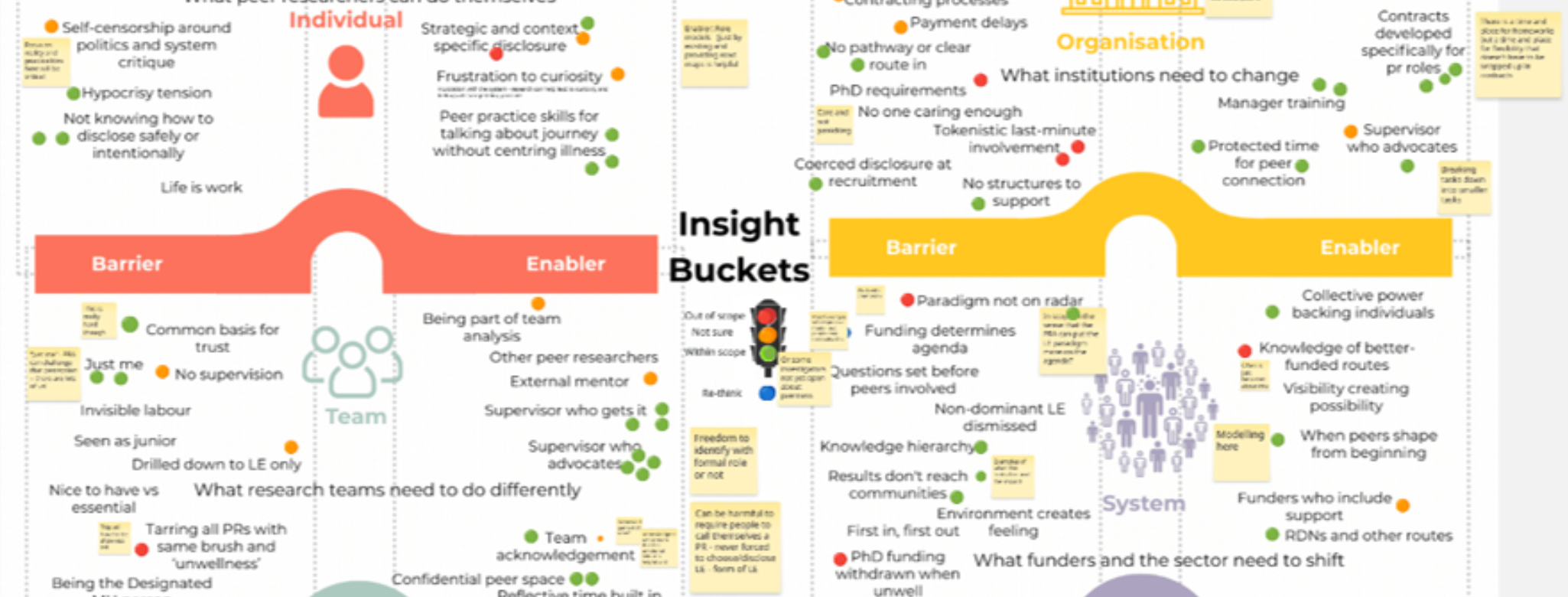
Fifty-three people spoke to us, from twelve countries, about what it actually takes to do peer research well. They spoke with us in interviews and focus groups, and then our project team of peer researchers (community and academic), and peer leaders worked with us to make sense of what we had heard together. What came out of that work is the first report from the Peer Research Academy, and we are delighted to share it with you.
The Peer Research Academy is a Wellcome funded initiative led by the University of Nottingham's Institute of Mental Health, delivered in partnership with Habitus Collective and Intentional Peer Support. It exists because people with lived experience are already doing research that matters, often with remarkable skill and commitment, but without the infrastructure, recognition, or collective support that would allow this work to be sustainable. This discovery report is the first piece of that work, and it lays the ground for everything that follows.
What peer researchers bring
"Peer researchers do not simply add a perspective to research; they change what the research is able to see." That distinction is key. Not just adding a viewpoint to a process that would otherwise carry on unchanged. It’s about the questions that get asked in the first place, the trust that gets built with participants, and the things that get noticed in analysis that would otherwise be missed entirely.
One participant shared: "Everyone has bias and lived experience bias is required for good analysis. Your bias is not something that conflicts with how you analyse information. Your bias is required to analyse this information well." Another described it as "the framing of the research and the questions that are being asked."
What gets in the way, and what works when it works
Peer researchers didn’t shy away from sharing the barriers. Peer researchers told us about unfair pay, about being brought onto projects at the last minute to meet a funder requirement, and about the particular exhaustion of holding a "perfect peer" expectation; well enough to work, credible enough to be taken seriously, open enough to be authentic, and contained enough not to make anyone uncomfortable. One participant described it as being "like Goldilocks' porridge, we have got to be just right, and we have got absolutely no say over what just right is." Another told us, "I was named a co-author and never read the paper. I was supposed to be grateful."
But the report is just as clear about what changes things. One university research team took a hard look at how they were recruiting and decided not to filter for research experience or a particular skill set at all. The key quality they asked for was interest in the project. Fourteen people were interviewed, and all fourteen became researchers, not because the process lowered the bar, but because it removed a barrier that had nothing to do with whether someone could do the work well. It also meant the team was never relying on a single peer researcher to represent lived experience on their own, which participants told us again and again makes a real difference.
When one manager fought to have a peer researcher paid at the equivalent of a master's student rather than an administrative rate, that fight made a material difference to how she was seen and valued. When peer researchers had access to an external mentor, someone with real knowledge of peer research but no stake in the day to day project, that relationship helped them unpick challenges, navigate the hidden rules of academic settings, and think properly about their own development.
The pattern that comes through again and again is this: the single most consistent enabler participants described was other peer researchers to connect with and learn from. Not being the only person with lived experience on a project or team. Having somewhere to take the emotional weight of the work. Having a manager who advocates. Having a funder who resources the relationship building work before the grant is even awarded, rather than expecting lived experience involvement to appear once the thinking has already been done.
A closing reflection
The report ends with a personal reflection from peer researcher Raj Hazzard, who has worked in mental health research for over a decade. Raj writes about the skill involved in staying grounded while holding a conscious awareness of one's own vulnerabilities, and about wanting to see the peer research community recognised, one day, as trailblazers who carved an easier path for those who come after them.
This report is the first step in a longer piece of work. Over the coming year, the Peer Research Academy will be developing tailored support packages, followed by a training course in 2027 and a peer research conference in Nottingham in September 2027. We are excited to share more as it develops.
Our deepest thanks go to the fifty-three people who gave their time, their honesty, and their expertise to this discovery phase, and who spoke to us about what this work has cost them, what it has given them, and what they believe it could become.
Download the report below.
You can also read more about the wider Peer Research Academy project in another on of our blog posts and visit the Peer Research Academy website.
Habitus Collective is a lived experience-led consultancy specialising in peer support, co-production, participatory research and community engagement. We are proud to be a delivery partner on the Peer Research Academy, working alongside the University of Nottingham's Institute of Mental Health and Intentional Peer Support to build the conditions for peer research to thrive. If you want to talk about peer research in your organisation, get in touch.
Find out more about what we do by clicking the button below.